Written summary
What we found, what we repaired, and what to watch
Ceiling Leak Repair Alhambra CA starts with finding the actual source, not just the stain. Water travels along rafters, so the wet spot on your ceiling is rarely where the roof failed. We inspect the attic, test suspect areas, repair the flashing, shingle, or vent boot causing the leak, then confirm the ceiling stays dry. If you need ceiling leak fixing in Alhambra today, call (626) 640-8498.
Every ceiling leak repair includes the full diagnostic and repair sequence. Here is what is covered in a standard visit, and what we handle separately if the damage goes beyond the roof.
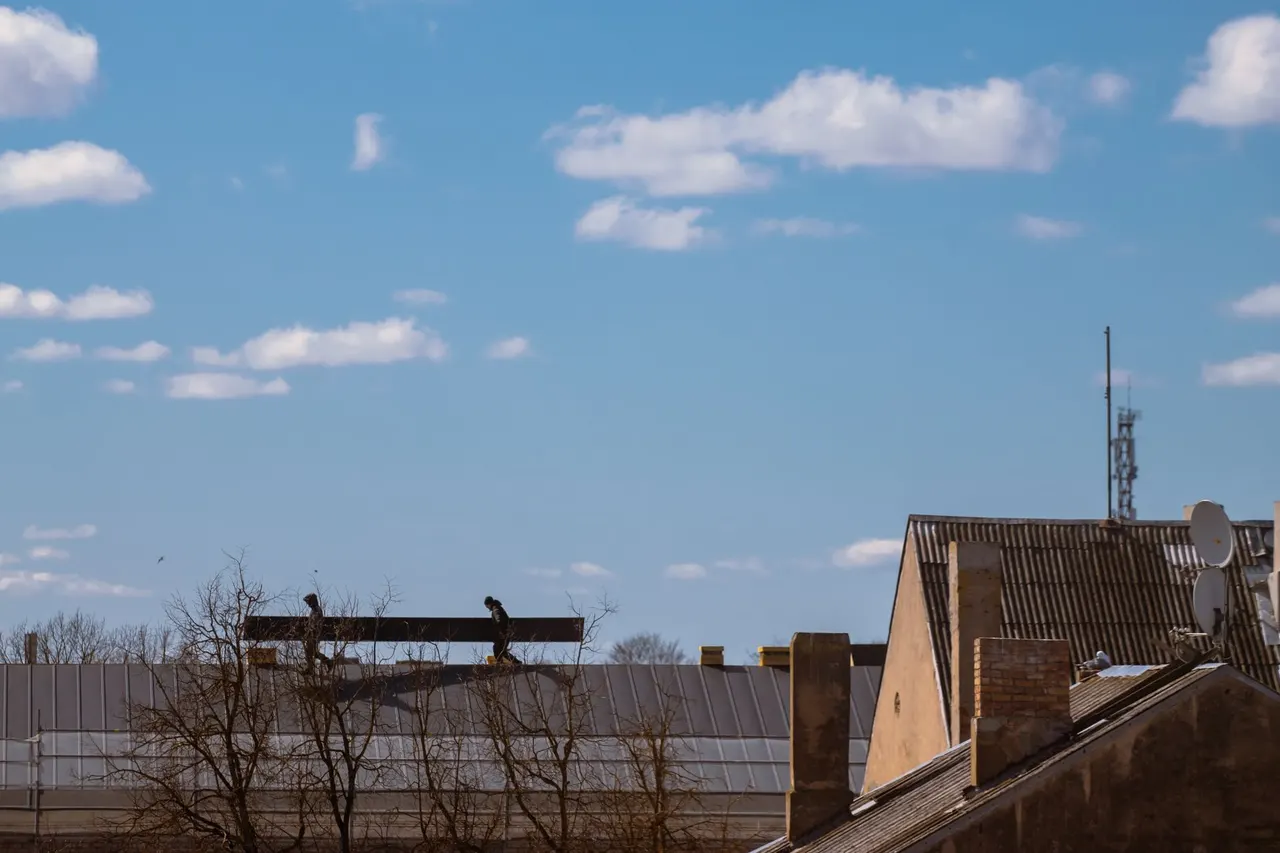
We handle ceiling leaks in single-family homes, duplexes, and small multi-family buildings across Alhambra. Most home leaks come from flashing, vent boots, or shingles that have aged out.
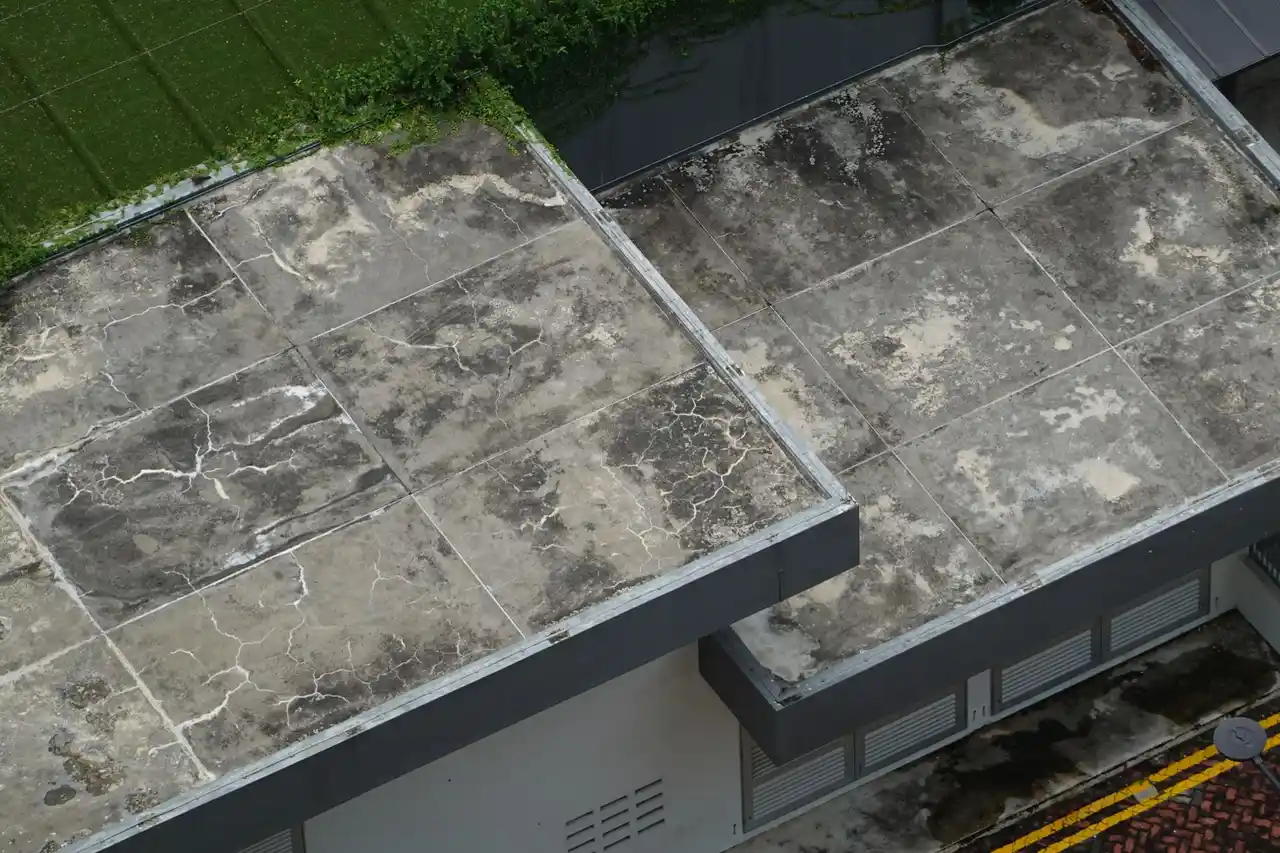
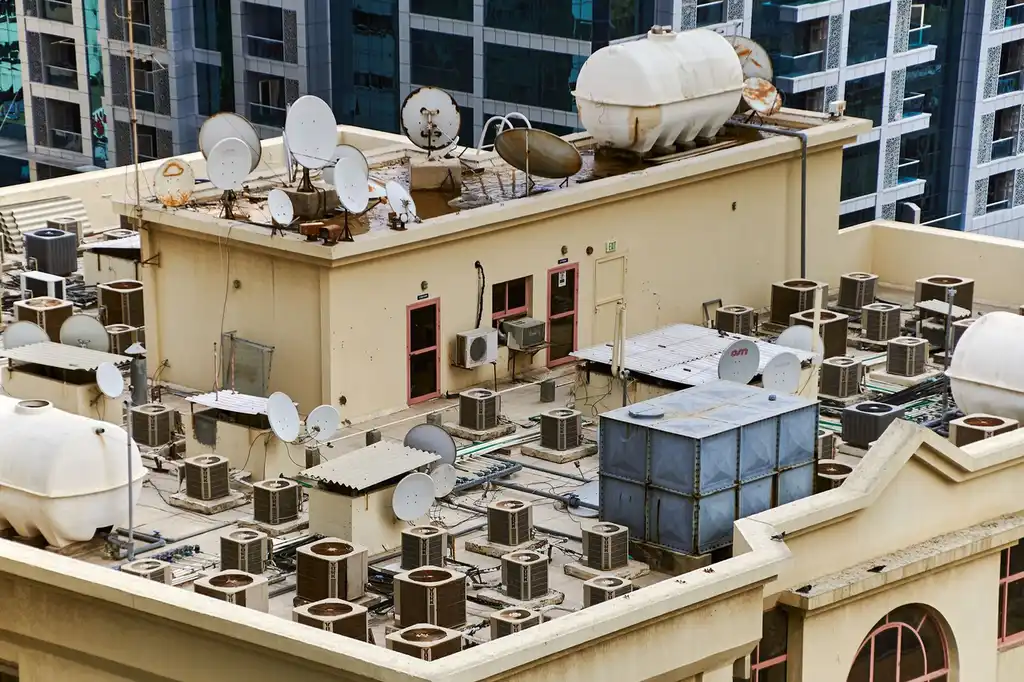
We work on commercial buildings with flat and low-slope roofs, scheduling around business hours to minimize disruption. Property managers get a written summary of what we found and repaired.
Ceiling Leak Repair Alhambra CA is the process of tracing water that shows up on your ceiling back to its entry point on the roof, then repairing that entry point and stopping the damage from spreading. A brown ring on the drywall is a symptom. The cause is usually a failed roof flashing, a cracked vent boot, a lifted shingle, or a seam that opened on a flat roof. We inspect the attic first, because the water trail is visible there before it soaks through the ceiling board.
Alhambra homes deal with a specific pattern of leaks. The city's older tracts have original clay tile and asphalt shingles, plus decades of patchwork. After a Santa Ana wind event or a heavy winter storm, we get calls from ZIP codes 91801, 91803, and 91804 about water dripping from a ceiling near a chimney or skylight. If you search for Ceiling Leak Repair Alhambra CA near me after a storm, the first thing we do is confirm whether the leak is active or residual moisture still working through the drywall.
Find the source first, repair it, then prove it with water.
Every job follows the same sequence: find the source, fix it, prove it is fixed. Here is what you can expect from the first call to the final check.

We ask three questions: where is the stain, how long has it been there, and is water actively dripping right now. If it is active, we tell you to move furniture and put a bucket down. If the ceiling is bulging, we tell you to stay clear of it. This call takes about five minutes and sets the priority level.
We start in the attic with a moisture meter and an infrared thermal imaging camera. The camera shows temperature differences caused by evaporating moisture, which reveals the water path even when the surface looks dry. Then we go up on the roof and inspect the area above the trail, plus the flashing, vent boots, and valleys nearby.
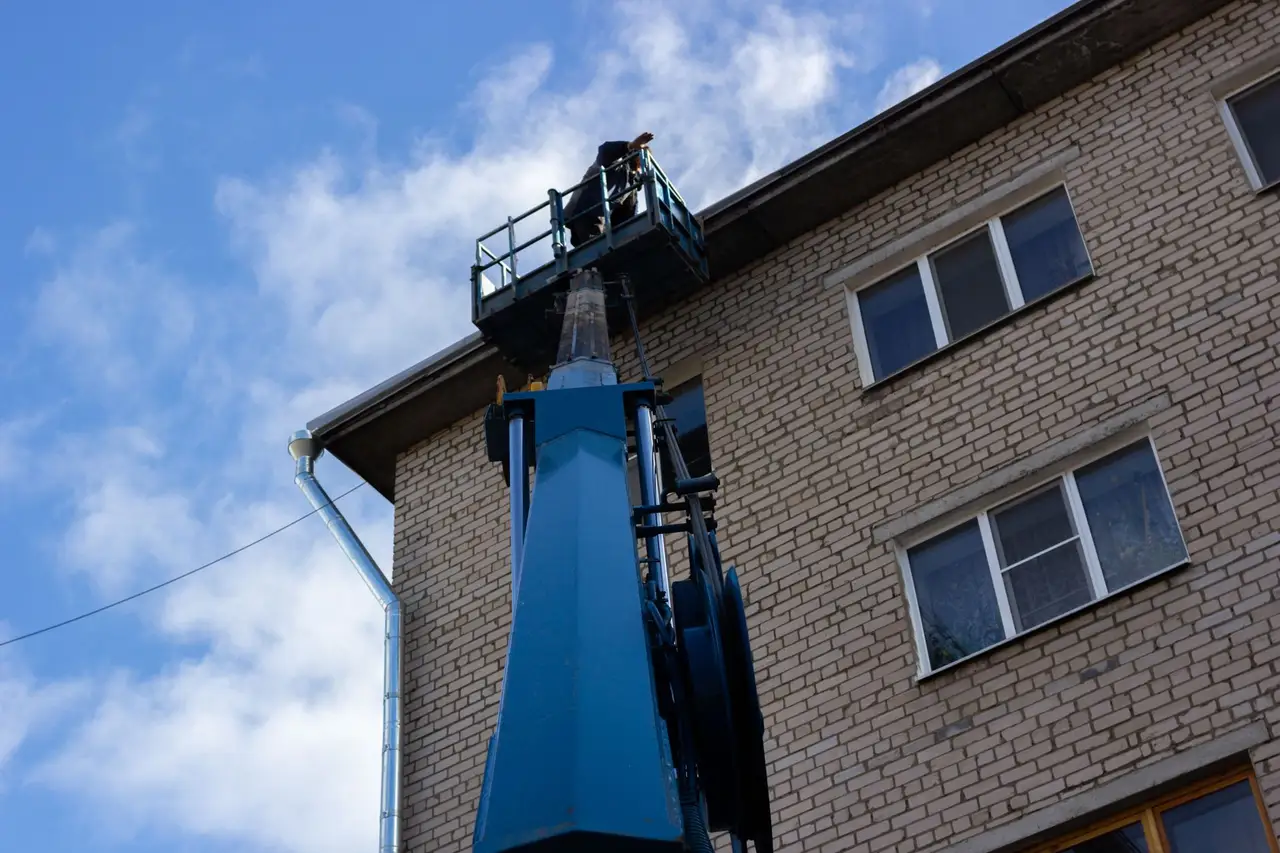
Before we repair anything, we confirm the source. On a suspected flashing leak or vent boot leak, we run a hose test on the roof while a second person watches the attic. This takes 15 to 30 minutes and eliminates guesswork. We do not seal a roof penetration until we have seen water enter through it.
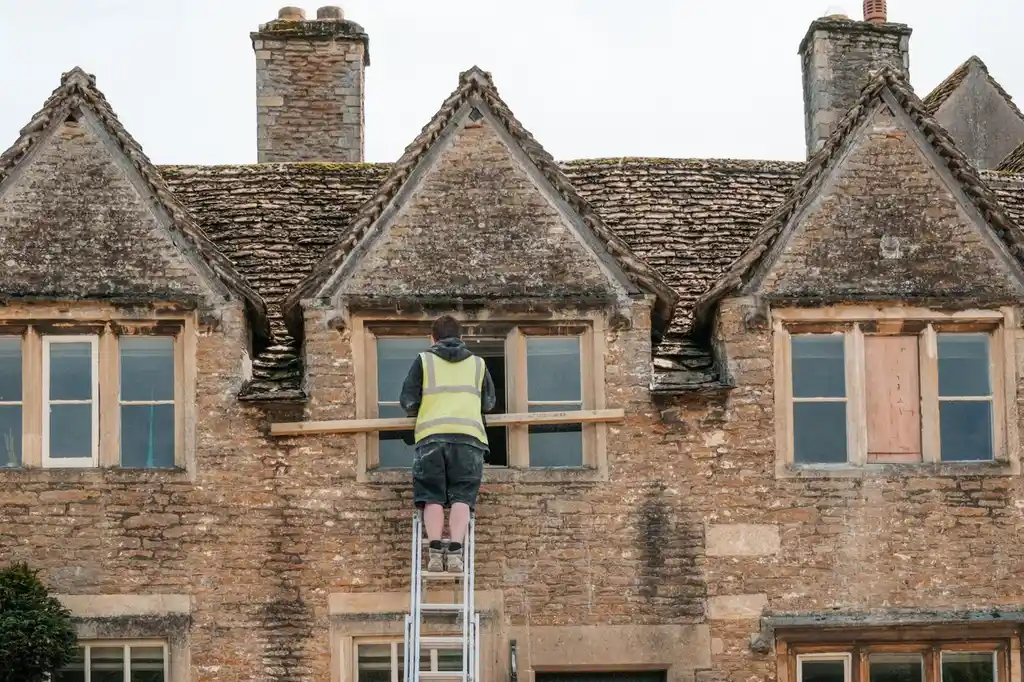
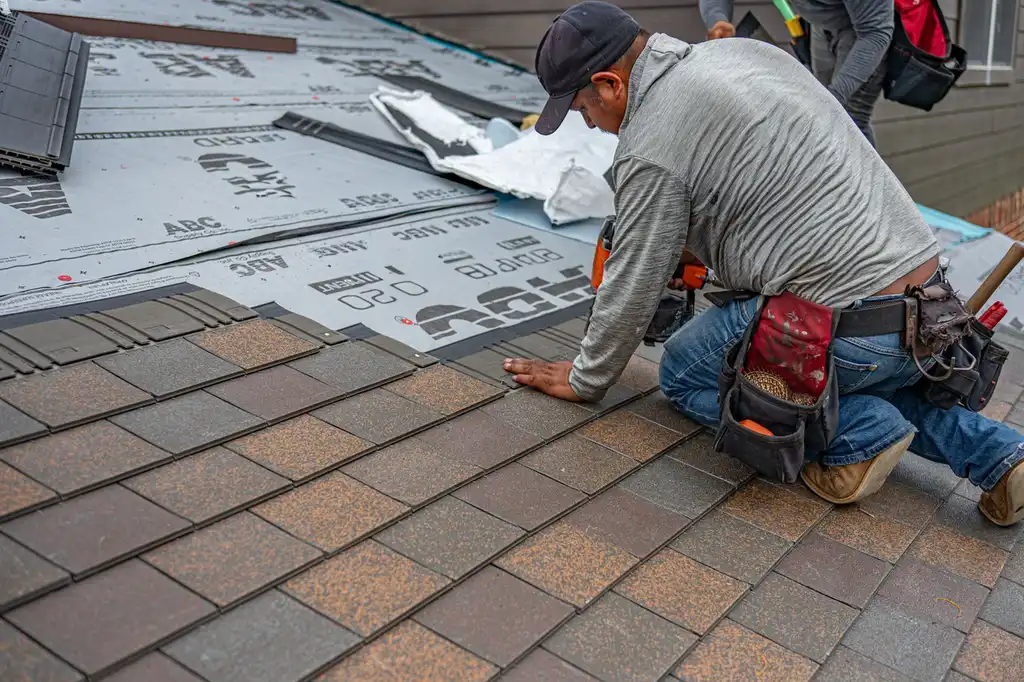
Repairs depend on what failed. A vent boot leak gets a new boot. A flashing leak gets new flashing and roof cement. A shingle damage issue gets replacement shingles and underlayment. We use GAF, Owens Corning, and CertainTeed materials that match what is already on your roof, so the repair blends in.
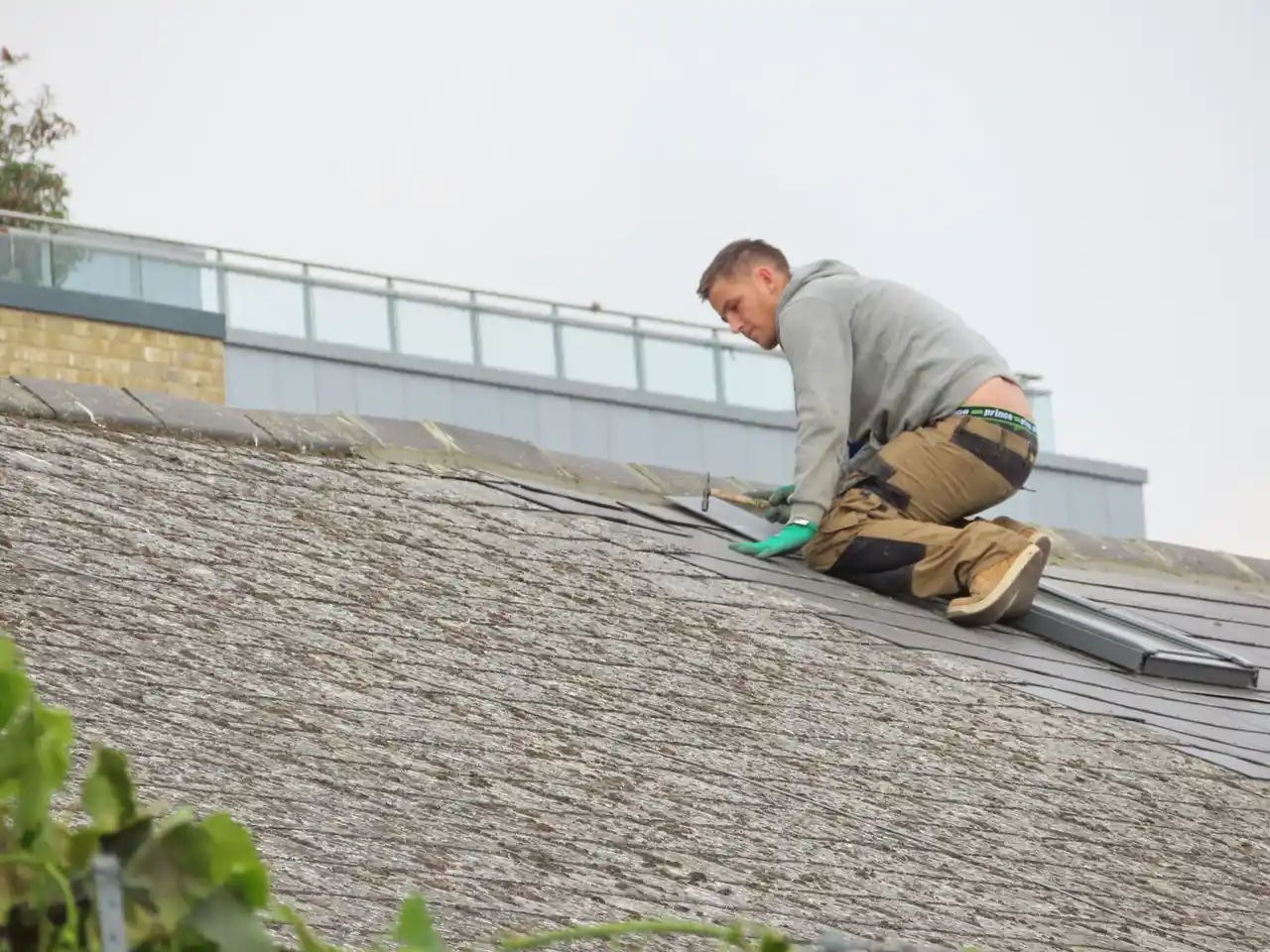
After the repair, we run the hose test again on the same area. If the attic stays dry, the repair is done. We then check the ceiling itself: whether the drywall needs patching, whether the stain needs sealing primer, and whether the area needs a few more days to dry before you paint.
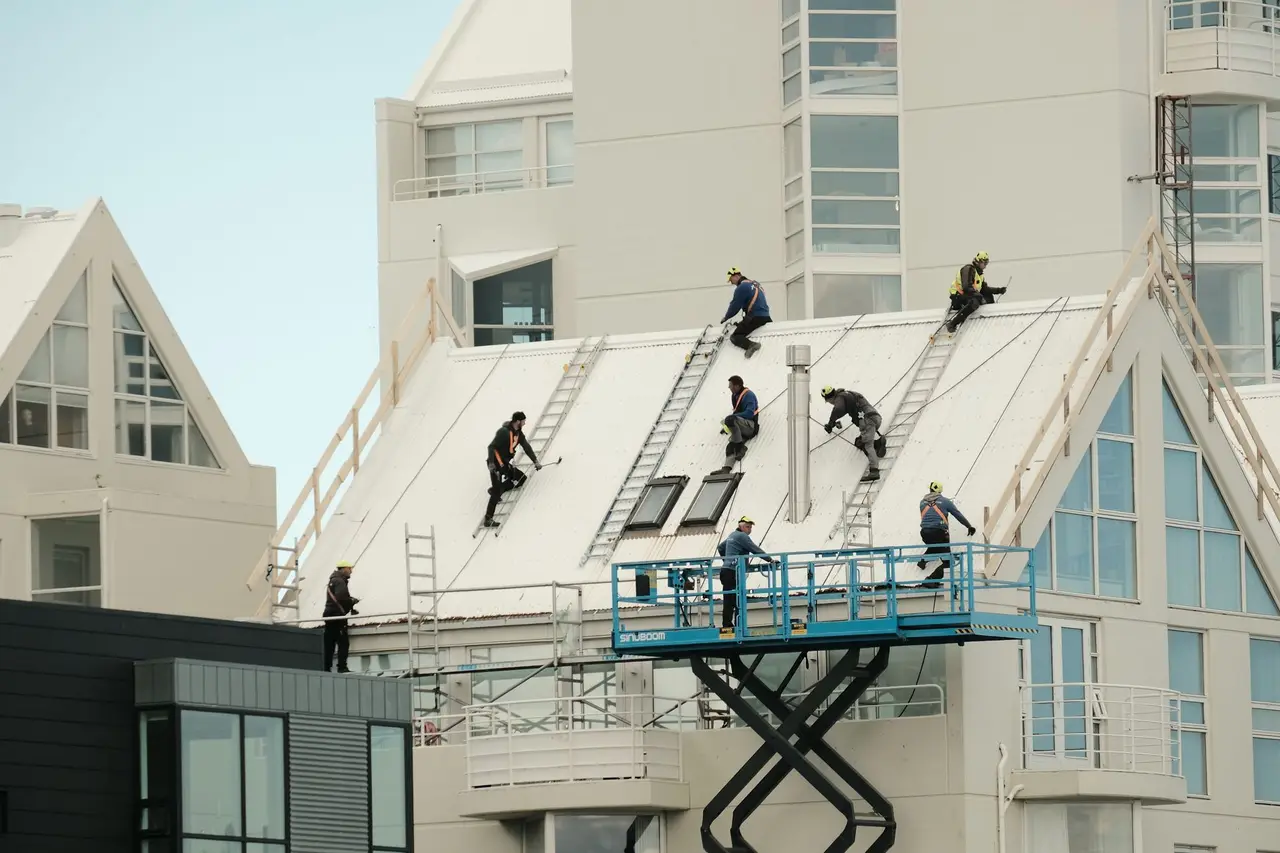
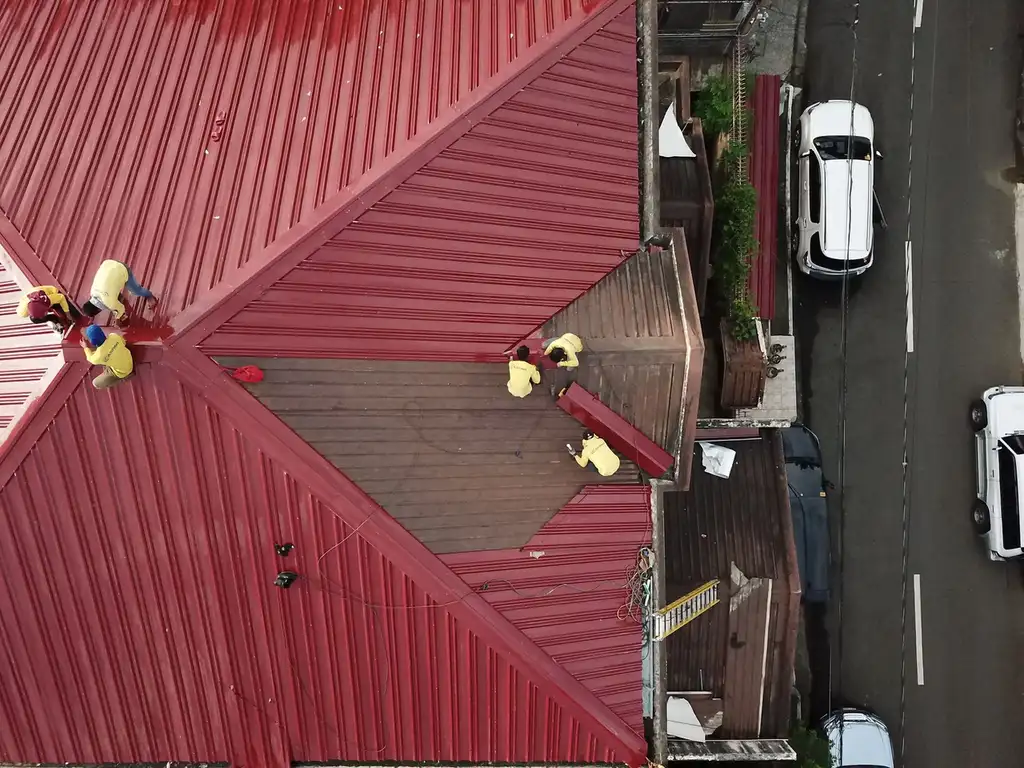
Shows temperature differences caused by evaporating moisture, revealing the water path in the attic even when the surface looks dry. This is how we find leaks that visual inspection misses.
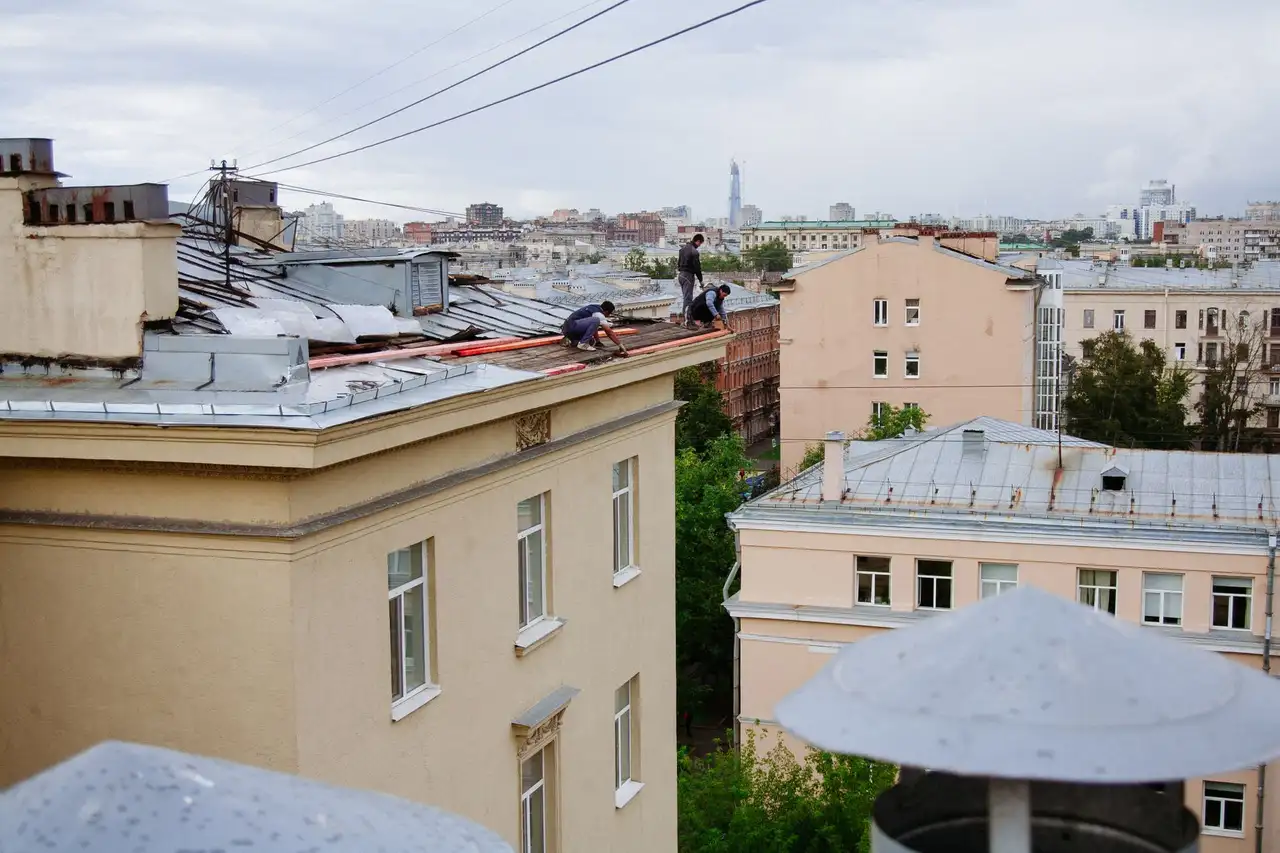
Measures the moisture content of drywall, insulation, and wood. We use it to confirm whether a leak is active, how far the moisture has spread, and when the area is dry enough to patch.
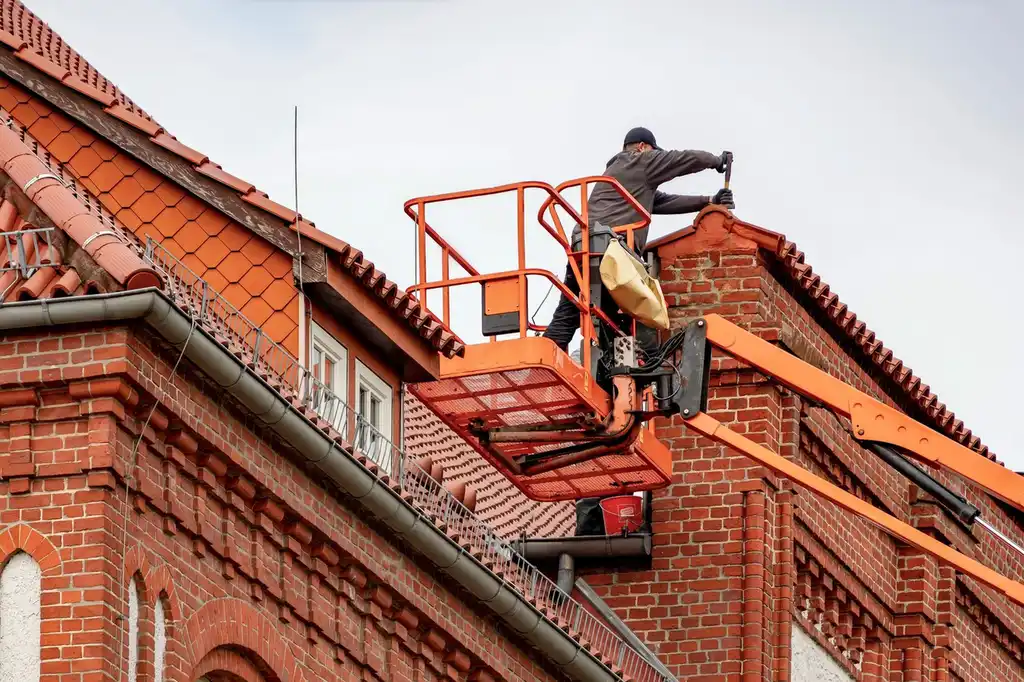
Provides safe access to the roof for inspection and repair. We use ladder stabilizers and tie-offs to work safely on steep pitches and two-story homes.
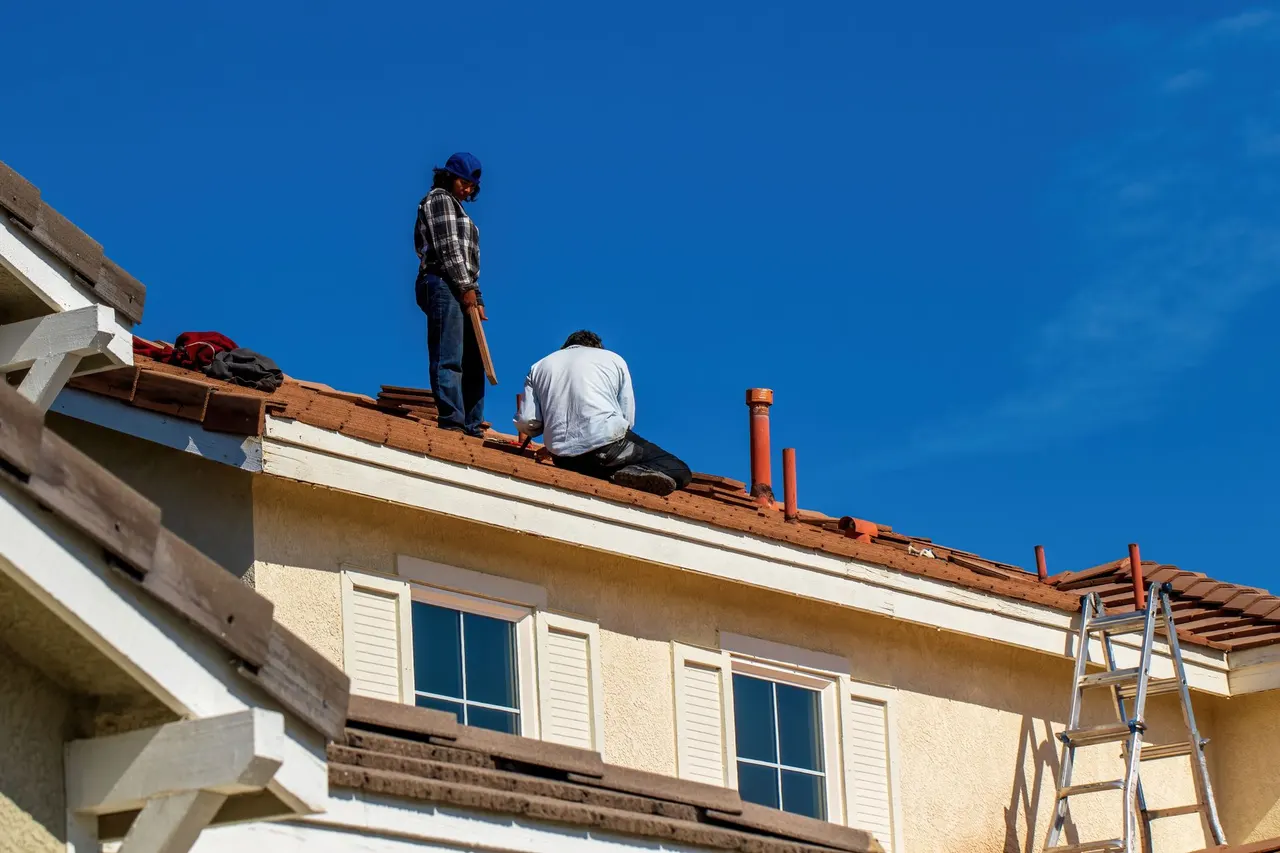
Applies Henry and DAP sealant at flashing edges, penetrations, and seams. We match the sealant type to the roof material so it bonds correctly and lasts.
Lifts shingles and cuts damaged material during repair. These are the tools that let us replace a failed section without disturbing the surrounding roof.

The hose is for testing repairs: we run water on the repaired area and watch the attic. The tarp is for emergency protection when a leak is active and the permanent repair has to wait.
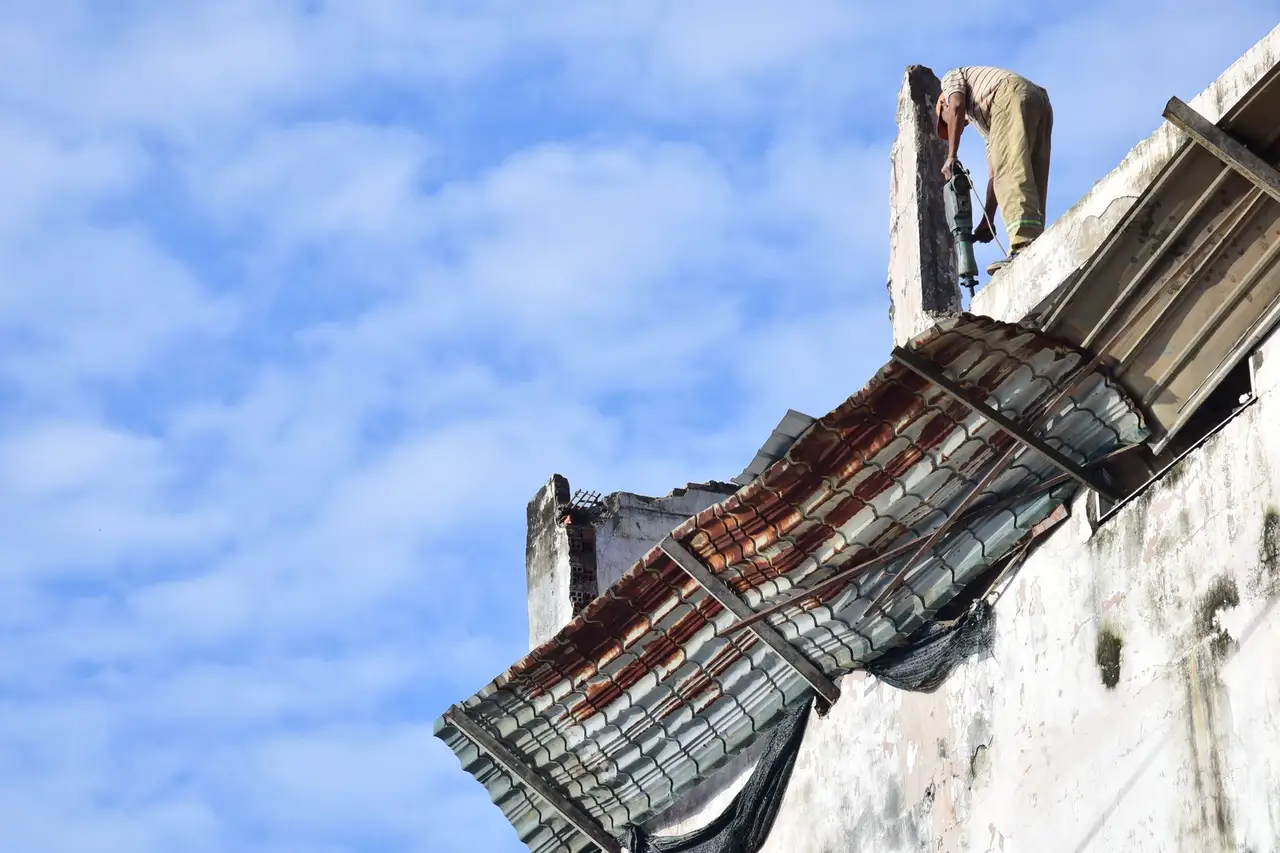
We run water on a suspected area while a second person watches the attic. This confirms the exact entry point before we repair anything. It takes 15 to 30 minutes and is the step that separates a confirmed repair from a guess.
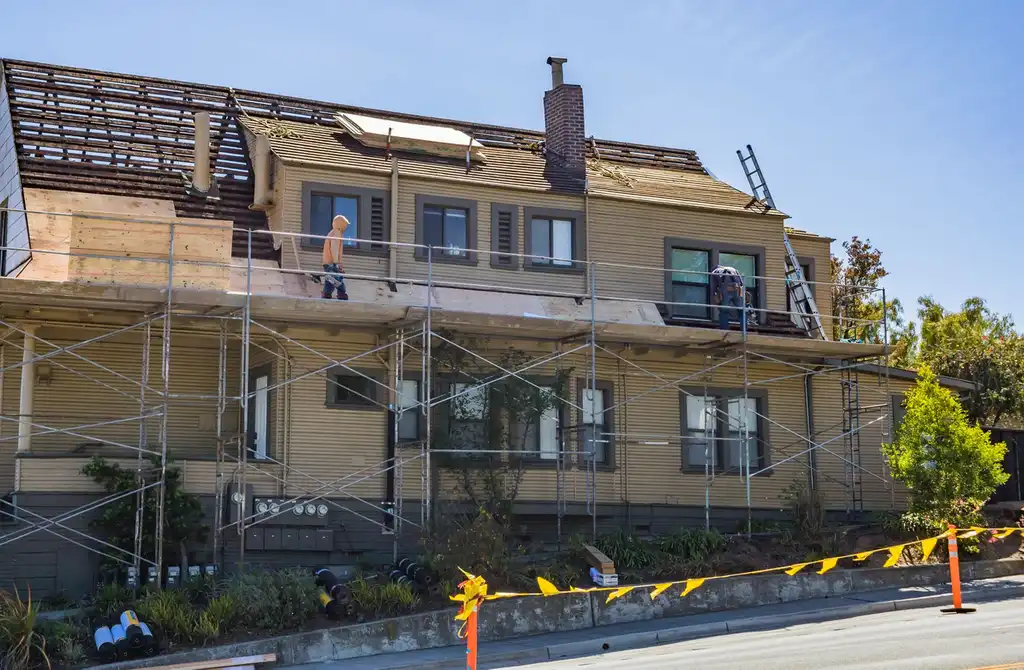
We start in the attic, not on the roof. Water leaves a trail on rafters and insulation that shows where it entered. Starting in the attic tells us where to look on the roof, which saves time and makes the repair more accurate.
Call us the same day. We inspect the attic and roof, find the source, and repair it before the next rain. If the stain is still damp, we confirm whether the leak is active or just residual moisture working through the drywall. The leak is stopped, the ceiling dries, and you avoid the mold and sagging that come with a leak that keeps running.
Call (626) 640-8498 immediately. We treat active leaks as priority calls. If we cannot get there within the hour, we walk you through shutting off the water source if possible and moving valuables. We also offer emergency roof tarping to stop the water while we schedule the permanent repair. The drip stops, your belongings are protected, and the permanent repair is scheduled.
We re-inspect from the attic with a moisture meter and infrared camera. Repeat leaks usually mean the first repair sealed the wrong spot. We confirm the actual source with a hose test, then repair it correctly. The leak is fixed at the real source, and you stop paying for repairs that do not hold.
We inspect the roof and attic, document what we find, and repair the source. We provide a written summary of the repair, which is useful for the transaction. The ceiling stain is resolved with a documented repair, and the transaction moves forward without a leak hanging over it.
Alhambra's housing stock ranges from 1920s bungalows to 1980s tract homes, and each era has its own leak patterns. Older homes often have original clay tile or wood shingle roofs with flashing that has been patched multiple times. Mid-century homes have asphalt shingles that are now at or past their service life. The city gets most of its rain between November and March, with occasional wind-driven storms that push water into places a normal rain would not reach. That is why we see a spike in calls for ceiling leak fixing in Alhambra during and right after winter storms. If you need Ceiling Leak Repair Alhambra CA 24/7 during an active storm, call (626) 640-8498 and we will prioritize your call. We also work with Los Angeles County building standards, so any repair we do meets code for the permit scope if one is required.
A homeowner in the 91803 ZIP code had a brown stain spreading on the bathroom ceiling for three weeks. A previous handyman had sealed the roof around the vent pipe with caulk, but the leak continued. The ceiling drywall was soft to the touch.
We replaced the cracked vent boot with a new one and sealed it at the base. The hose test confirmed the attic stayed dry. The ceiling dried in three days, and the homeowner patched and painted it. Total repair time was under three hours.
Check vent boots every two years for cracking. UV exposure breaks down the rubber, and a $15 boot replacement prevents a $500 ceiling repair.
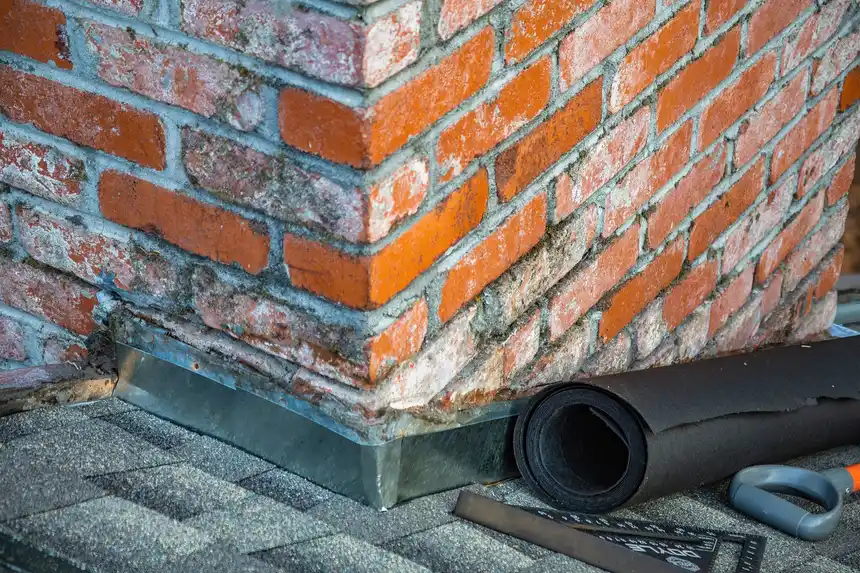
After a January storm, water was dripping near the chimney in a San Gabriel home. The ceiling stain was 4 feet wide and growing. The chimney flashing had pulled away from the masonry, leaving a gap that let water run straight down.
We rebuilt the chimney flashing with new metal and roof cement, then hose tested it for 20 minutes. The attic stayed dry. The homeowner replaced the ceiling drywall section and painted it. No leak has returned through two subsequent storms.
Inspect chimney flashing each fall before the rainy season. Look for gaps where the metal meets the masonry, and reseal with roof cement if you see separation.
A property manager in Monterey Park had a ceiling leak in an upstairs unit that kept coming back. Two previous repairs had sealed the flashing, but the leak persisted. The flat roof had visible ponding near a seam.
We found the leak at a failed seam in the modified bitumen membrane, not the flashing. We repaired the seam, reinforced it, and checked drainage. The ceiling stayed dry through the next rain. The repair cost less than the two previous attempts combined.
Check flat roof seams and drainage twice a year. Clear debris from drains and look for ponding water that sits more than 48 hours after rain.
Most ceiling leaks fall into a few categories. Here are the ones we see most often in Alhambra and how we handle them.
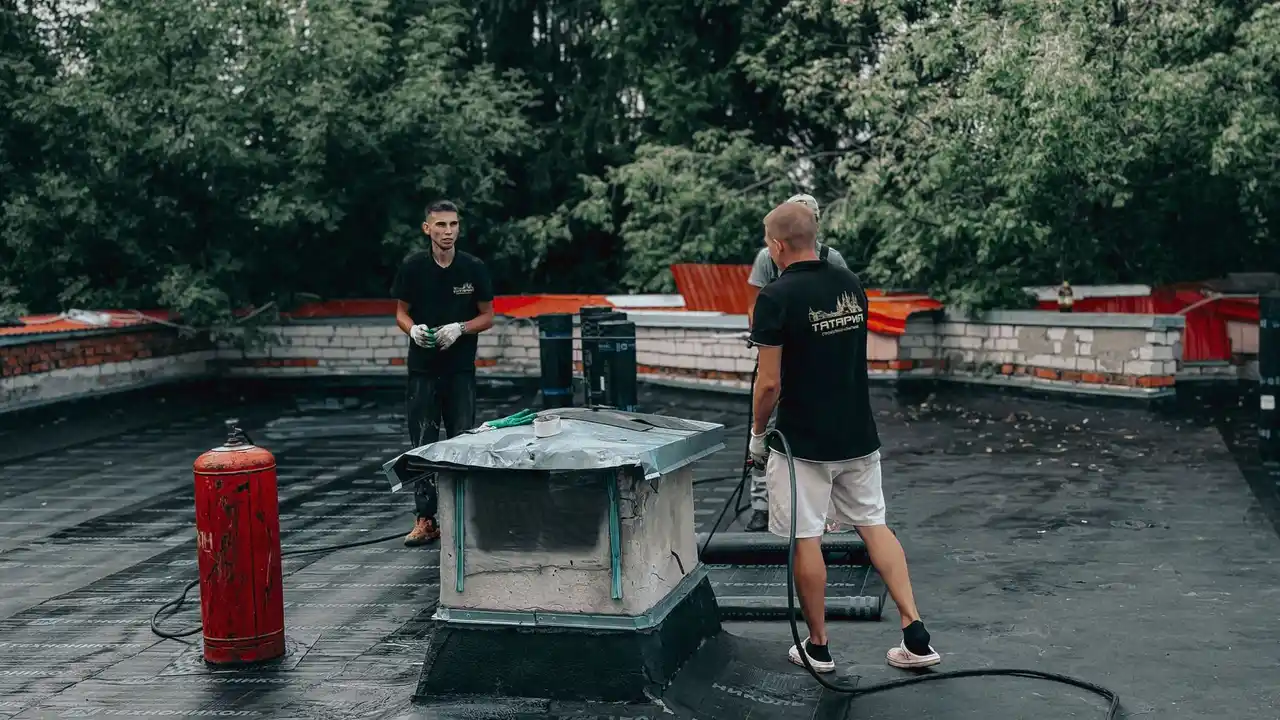
We trace the water path from the attic, repair the roof source, and confirm the ceiling stays dry. If the drywall is still sound, we seal the stain with primer. If it has sagged, we replace the board after the roof repair is verified. The stain grows every time it rains, and the drywall underneath gets softer. Left alone, the board sags and eventually falls.
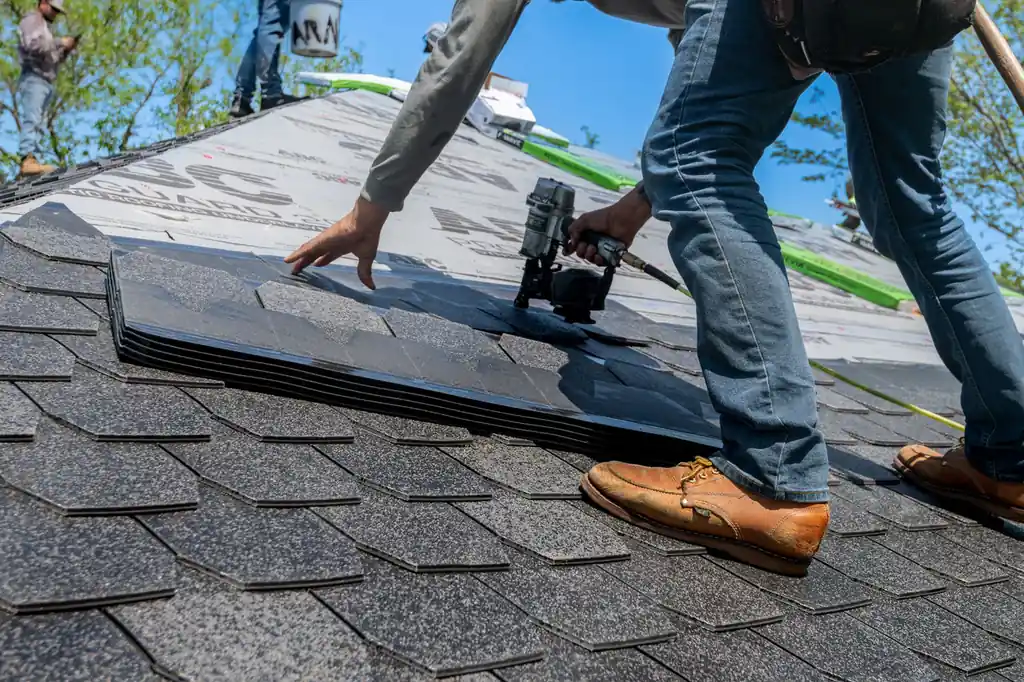
We rebuild the flashing at the chimney or skylight curb, replace any failed sealant, and hose test the repair. This is one of the most common ceiling leak fixes we do in Alhambra's older homes. Chimney and skylight flashing take the most weather abuse on any roof. When they fail, water runs straight down and shows up on the ceiling within hours of a storm.
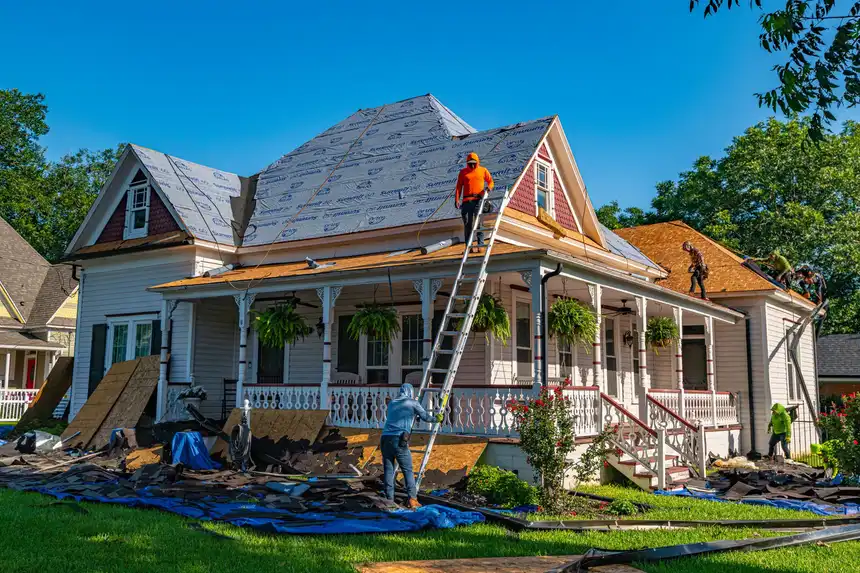
We start from scratch with a full inspection, including infrared thermal imaging if the source is not obvious. We confirm the actual entry point with a hose test before touching the roof, so the second repair is the one that holds. A repair that sealed the wrong spot will fail again. Each repeat leak soaks the drywall further and wastes money on repairs that do not address the cause.
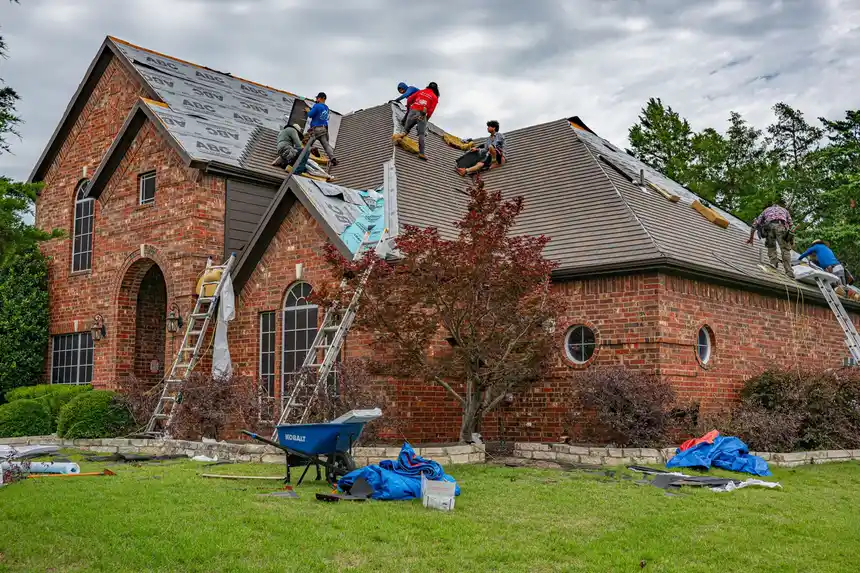
We inspect the flat roof for ponding, check the TPO or EPDM membrane seams, and repair the failed area. We also check drainage so water does not sit on the roof and find the next weak point. Flat roofs pond water, and ponding finds every seam and penetration. The leak can travel far from the entry point before it shows on the ceiling.
Wet drywall loses strength fast. A ceiling that has been leaking for two weeks can sag, and the fix moves from a patch to a full board replacement. We stop the water at the roof, then assess whether the ceiling board needs replacement or just drying and sealing.
Mold needs moisture and about 24 to 48 hours to start colonizing wet drywall and insulation. If your ceiling has been damp for days, we check the attic for visible growth and tell you honestly whether the area needs more than a leak repair. Most active leaks caught early need no mold work at all.
Wet attic insulation compresses and loses R-value. A leak that soaks a 4-foot section of blown-in insulation can cut the thermal performance of that area by half. We identify saturated insulation during the attic inspection and tell you what needs to be replaced versus what can dry in place.
Ceiling fixtures, recessed lights, and attic wiring run through the same bays where water travels. Water and live wiring do not mix. If the leak is near a fixture, we shut off that circuit before we start and check the junction box for corrosion once the area is dry.
Clear records you can keep and share.
What we found, what we repaired, and what to watch
Confirmation that the repaired area stays dry
How long before you can patch and paint
The stain on your ceiling is rarely directly under the roof damage. Water travels along rafters and insulation before it drips, so the source can be 5 to 10 feet away.
The wet spot shows where water exits the ceiling, not where it entered the roof. We trace the path from the attic to find the real source. This is why sealing the stain from below never works.
A damp stain does not always mean the leak is still running. Water can take days to work through insulation and drywall. We use a moisture meter to tell the difference before recommending a repair.
After the roof repair, the ceiling needs two to three days to dry before patching and painting. Painting over damp drywall traps moisture and leads to mold. We tell you when the area is ready.
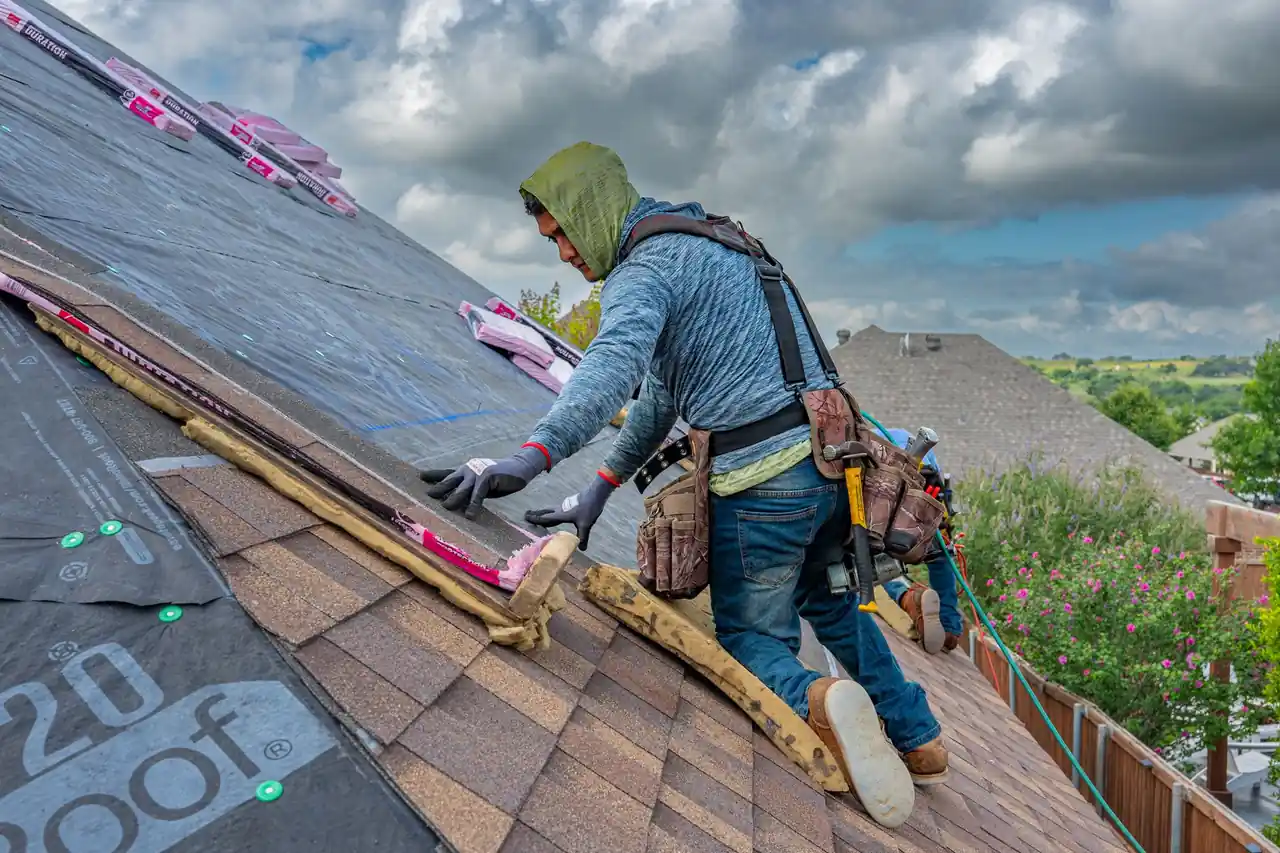
Not sure if we cover your area? Call and ask. (626) 640-8498
Most ceiling leak repairs in Alhambra run $350 to $1,200 in 2026, depending on the source and access. A simple vent boot replacement is on the low end. A flashing leak at a chimney or a roof valley leak that requires shingle removal and underlayment replacement is on the higher end. If the ceiling drywall also needs patching, add $150 to $400. We give you the number before we start.
Water on your ceiling almost always enters through the roof, not through the ceiling itself. Common causes in Alhambra are failed roof flashing at a chimney, a cracked vent boot, a lifted shingle after wind, or a seam that opened on a flat roof. Water travels along rafters and insulation before it drips, so the stain location is often 5 to 10 feet from the actual entry point. We trace it from the attic.
We do. Roof Repair Alhambra Pros handles ceiling leak fixing in Alhambra and the surrounding areas, including San Gabriel, Monterey Park, Rosemead, and South Pasadena. We are licensed, insured, and we carry the C-39 Roofing license. Call (626) 640-8498 and we will schedule an inspection, usually the same day for active leaks.
The roof repair itself usually takes two to four hours. The full visit, including attic inspection, hose testing, repair, and verification, runs three to five hours. If the ceiling drywall needs patching and painting, that is a separate visit after the area dries, typically two to three days later. We tell you the timeline before we start so you can plan.
Water on your ceiling gets worse, not better. Call (626) 640-8498 and we will inspect the roof, find the source, and give you a price before we start. Same-day service for active leaks in Alhambra and nearby cities.
Call us at (626) 640-8498 or email [email protected]. We answer the phone during business hours and respond to emergency calls after hours. Same-day estimates are available for most jobs in Alhambra and surrounding areas.